1,950 m
Elevation
1,950 m
Prominence
Coordinates
Unknown — sacred mountain since Joseon dynasty
First Ascent
About Halla-san
Hallasan — also written Mt. Halla, Mount Halla or 한라산 — is the highest mountain in South Korea at 1,950 m, and the centrepiece of Hallasan National Park on Jeju Island. Two trails reach the top: Seongpanak (9.6 km, the gentler one) and Gwaneumsa (8.7 km, steeper and more scenic). Both finish at the Baengnokdam crater lake. Hikers must reserve a free online permit in advance and start early — rangers turn people back at the gates in the afternoon.
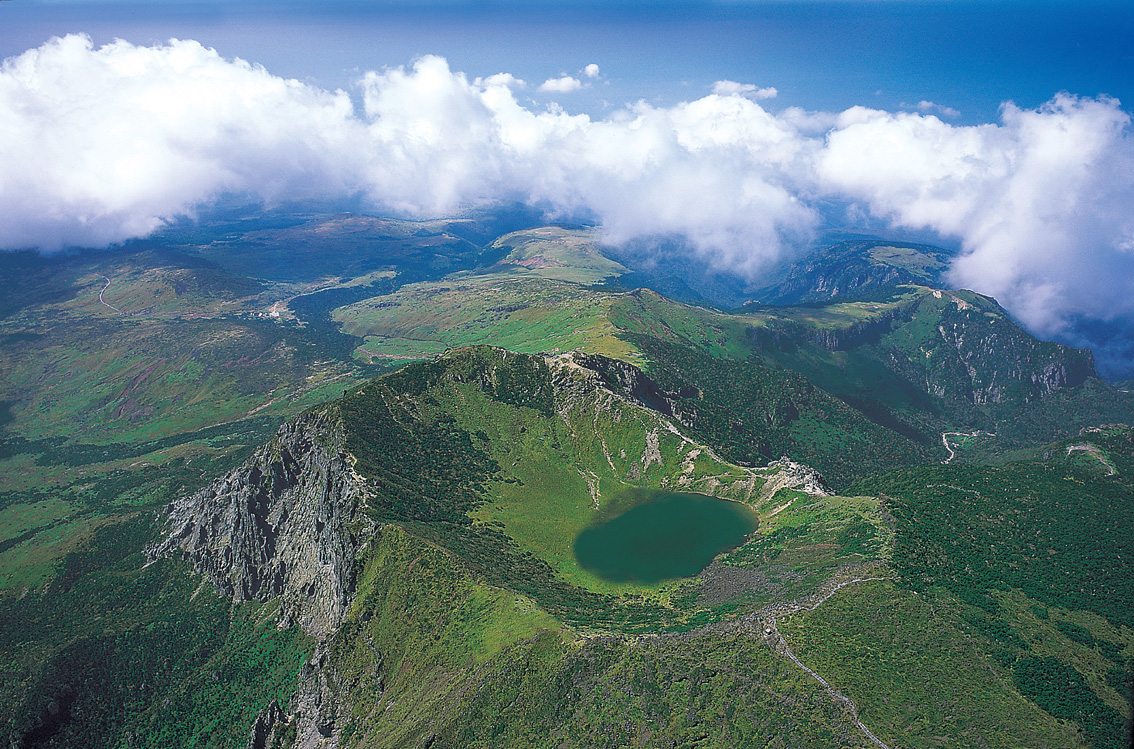
A shield volcano on Jeju Island and UNESCO World Heritage Site. The Seongpanak and Gwaneumsa trails lead to the stunning Baengnokdam crater lake at the summit. The true summit is restricted, but the legal highest point (East Summit, 1,925 m) was climbed in 2024.
Also known as: Hallasan, Mt. Halla, Mount Halla, 한라산, Halla-san.
Climbing Halla-san: route, season and difficulty
- How long it takes
- 4–8 hours round trip from the standard trailhead
- Do you need a guide?
- No guide needed. A marked trail, decent fitness and a map or GPS track are enough for most fit hikers.
- Best season
- Usually May to October (July–September for the high routes).
- Terrain & gear
- Marked walking trails with a sustained but non-technical climb. Hiking boots, waterproofs, water, food and navigation. Nothing technical.
Hallasan trails compared: Seongpanak vs Gwaneumsa
Only two of Hallasan's trails reach the Baengnokdam crater at the summit. The rest — Eoseungsaengak, Yeongsil and Eorimok — top out on the plateau below and turn back, which is the single most common mistake first-time Mt. Halla hikers make when planning a Jeju hiking day.
| Seongpanak trail | 9.6 km each way, ~950 m ascent, 8-9 h round trip. Gentlest gradient, forested, easiest to pace. |
|---|---|
| Gwaneumsa trail | 8.7 km each way, ~1,400 m ascent, 9-10 h round trip. Steeper, stairs and suspension bridges, far better views. |
| Best combination | Up Gwaneumsa, down Seongpanak — the classic traverse. Buses link both trailheads back to Jeju City. |
| Non-summit trails | Yeongsil and Eorimok reach Witseoreum shelter (1,700 m) only — good short options in bad weather. |
Permits, cut-off times and booking Hallasan
- ▸A free reservation (QR code) is required for both summit trails and is checked at the gate — book on the Hallasan National Park reservation site up to a month ahead.
- ▸Daily quotas apply: roughly 1,000 hikers on Seongpanak and 500 on Gwaneumsa.
- ▸Entry cut-offs shift with the season — typically 05:30-12:00 in summer and as early as 06:00-10:00 in winter. Miss the checkpoint below the summit and rangers turn you back.
- ▸There is no water on the upper mountain and no food sold on the trail. Carry 2 litres and lunch; the shelters sell nothing.
- ▸Weather on Jeju changes fast. Trails close in typhoons and heavy snow — check the park notice board the morning you go.
Best time to hike Mt. Halla
October and November are the prime months: cool air, clear views over Jeju and the island's famous autumn colour. May and June bring azaleas across the plateau. Winter is the most spectacular and the most demanding — the summit is buried in snow with rime-covered trees, and microspikes are effectively mandatory from December to March. July and August are hot, humid and typhoon-prone, with the crater usually in cloud.
Getting to the trailheads from Jeju City
- ▸Seongpanak: bus 281 from Jeju City bus terminal, roughly 40 minutes, running from before dawn.
- ▸Gwaneumsa: bus 475 from Jeju City, about 30 minutes; the campsite at the trailhead makes an early start easy.
- ▸Taxis from Jeju City run 20,000-30,000 KRW to either trailhead and are worth it for the first bus-less start.
- ▸Jeju is served by direct flights from Seoul Gimpo (one of the busiest air routes in the world), Busan and much of East Asia.
📝 Martin's Personal Note
Hallasan 한라산 on Jeju, peak #26 — climbed in Crocs. Not recommended footwear, but it worked, and the crater at the top was worth it.
Frequently Asked Questions
What is the highest mountain in South Korea?
The highest mountain in South Korea is Halla-san, at 1,950 meters above sea level.
How long does it take to climb Halla-san?
Allow 4–8 hours round trip from the standard trailhead. Times vary with fitness, conditions and which trailhead you start from.
Can you climb Halla-san without a guide?
No guide needed. A marked trail, decent fitness and a map or GPS track are enough for most fit hikers.
When is the best time to climb Halla-san?
The usual season is May to October (July–September for the high routes). Outside that window expect snow, storms or closed access.
What gear do you need for Halla-san?
Hiking boots, waterproofs, water, food and navigation. Nothing technical.
How high is Halla-san?
Halla-san stands at 1,950 meters (6,398 feet).
Where is Halla-san located?
Halla-san is located in South Korea, within the Jeju Island (shield volcano).
Has Martin climbed Halla-san?
Yes — Martin summited Halla-san in 2024 as part of his country highpointing project.
How tall is Hallasan?
Hallasan is 1,950 metres (6,398 feet) tall, making it the highest mountain in South Korea and the highest point on Jeju Island.
Which trail should I take up Hallasan?
Seongpanak (9.6 km each way) is the easier, more gradual route and the most popular. Gwaneumsa (8.7 km each way) is steeper with better scenery. Many hikers go up Gwaneumsa and down Seongpanak.
Do you need a permit to hike Hallasan?
Yes — the summit trails require a free reservation booked online in advance, and there are cut-off times at the checkpoints. Book early, especially for weekends and autumn foliage season.
How hard is the Hallasan hike?
It is a long day hike rather than a technical climb: roughly 8-10 hours round trip on well-maintained stone steps and boardwalks, with no scrambling or gear required in summer.
Nearby highpoints of similar height
Highpointing lists to explore
Climbed Halla-san? Add it to your tick list
Log the summits you've climbed, build bucket lists, follow other adventurers and watch your country count grow. Free, and built by adventurers for adventurers.
- Tick ascents with dates & photos
- Track challenge lists & goals
- Follow adventurers, share trips