4,374 m
Elevation
2,764 m
Prominence
Coordinates
1956 — Soviet-Mongolian expedition
First Ascent
About Khüiten Peak
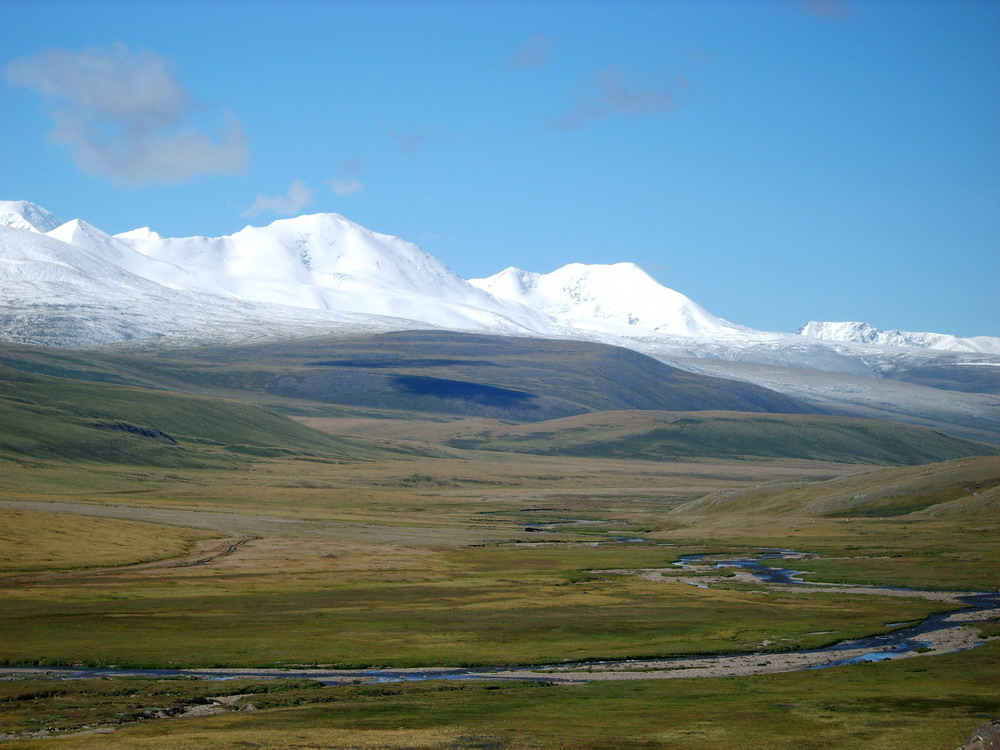
Khüiten Peak — often spelled Khuiten or Huiten Uul — is the highest mountain in Mongolia at 4,374 m, standing on the tripoint of Mongolia, China and Russia in the Altai Mountains. It is the tallest of the five Tavan Bogd summits, reached from Ölgii in Bayan-Ölgii province via a long off-road drive and a multi-day approach by camel or horse to the Potanin Glacier. A border permit and national park permit are both required, and the glacier approach means crampons, rope and ice axe are mandatory.
The highest peak in Mongolia, on the tripoint with China and Russia in the Altai Mountains. Surrounded by glaciers and accessible only via horseback or long off-road drives.
Also known as: Khuiten Peak, Huiten Uul, Kuitun, Tavan Bogd, Хүйтэн оргил.
Climbing Khüiten Peak: route, season and difficulty
- How long it takes
- 2–3 days including an approach and a hut or bivouac
- Do you need a guide?
- Strongly recommended unless you are an experienced alpinist. Glacier travel, altitude or remoteness make an unguided attempt serious.
- Best season
- Usually May to October (July–September for the high routes).
- Terrain & gear
- Glacier, snow or sustained technical rock at altitude. Crampons, ice axe, harness, rope and glacier-rescue gear plus warm layers and a helmet.
Note: Remote, glaciated, high altitude
The Tavan Bogd massif: Mongolia's highest mountains
Khüiten is one of the Five Saints — Tavan Bogd — the cluster of glaciated summits at the western tip of Mongolia where the Altai Mountains meet China and Russia. Between them they hold the largest glacier in the country, the 14 km Potanin, and every one of Mongolia's highest mountains.
| Khüiten (Хүйтэн) | 4,374 m — Mongolia's highest point, on the China-Russia-Mongolia tripoint. Glacier route, roped. |
|---|---|
| Nairamdal | 4,180 m — the actual tripoint marker; a common acclimatisation objective. |
| Malchin | 4,050 m — the non-technical one. A steep scree walk from base camp, no rope needed, and the usual consolation summit. |
| Bürged | 4,068 m — rarely climbed. |
| Ölgii | 4,050 m — rarely climbed. |
How a Khüiten Peak expedition actually runs
- ▸Days 1-2: fly Ulaanbaatar to Ölgii (about 3 h), organise permits, food and a driver.
- ▸Day 3: 6-9 hours of off-road driving to Tsagaan Gol and the park gate.
- ▸Day 4: 15-20 km approach to base camp at roughly 3,000 m below the Potanin Glacier — on foot with camels or horses carrying loads.
- ▸Day 5: acclimatisation, usually up Malchin Peak (4,050 m) for the view into Russia and China.
- ▸Day 6: alpine start, rope up on the Potanin Glacier, weave the crevasse field and climb the final 40-45° snow slope to the summit.
- ▸Days 7-9: reverse the approach with weather margin. Two spare days is the realistic minimum.
Permits, guides and costs
Two permits are needed: the Altai Tavan Bogd National Park entry permit and a border-zone permit, because the summit ridge is the international frontier. Both are handled in Ölgii and both need your passport details a few days in advance. Border guards do check.
Independent travel is legally possible but practically rare — the glacier, the driving and the permit paperwork mean almost everyone books a local operator in Ölgii. Expect roughly USD 1,500-2,500 per person for a 8-10 day trip including transport, permits, camels, guide and food, and less if you assemble a group and hire a driver directly.
Best season and conditions in the Mongolian Altai
The season is short: mid-June to early September, with July and August the most settled. Even then base camp regularly drops below freezing overnight and the Altai wind is relentless. Outside summer the access track is impassable and the massif turns full winter-expedition. Combine the trip with the Golden Eagle Festival in Ölgii in early October only if you are travelling, not climbing.
- ▸Glacier kit: rope, harness, crampons, ice axe, prusiks, plus crevasse-rescue skills.
- ▸Four-season tent and a sleeping bag rated to -15 °C at minimum.
- ▸No mobile coverage past Ölgii — a satellite messenger is the only realistic rescue link.
Frequently Asked Questions
What is the highest mountain in Mongolia?
The highest mountain in Mongolia is Khüiten Peak, at 4,374 meters above sea level.
How long does it take to climb Khüiten Peak?
Allow 2–3 days including an approach and a hut or bivouac. Times vary with fitness, conditions and which trailhead you start from.
Can you climb Khüiten Peak without a guide?
Strongly recommended unless you are an experienced alpinist. Glacier travel, altitude or remoteness make an unguided attempt serious.
When is the best time to climb Khüiten Peak?
The usual season is May to October (July–September for the high routes). Outside that window expect snow, storms or closed access.
What gear do you need for Khüiten Peak?
Crampons, ice axe, harness, rope and glacier-rescue gear plus warm layers and a helmet.
How high is Khüiten Peak?
Khüiten Peak stands at 4,374 meters (14,350 feet).
Where is Khüiten Peak located?
Khüiten Peak is located in Mongolia, within the Altai Mountains.
Has Martin climbed Khüiten Peak?
Not yet — Khüiten Peak is still on Martin's list of remaining country highpoints.
How high is Khüiten Peak?
Khüiten Peak is 4,374 metres (14,350 feet) high — the highest mountain in Mongolia and the highest of the Tavan Bogd massif in the Altai range.
How do you get to Khüiten Peak?
Fly to Ölgii in Bayan-Ölgii province, then a full day of off-road driving to the park gate, followed by a one to two day approach on foot, horse or camel to base camp below the Potanin Glacier.
What permits do you need for Tavan Bogd?
You need an Altai Tavan Bogd National Park permit and a border-zone permit, since the summit sits on the Mongolia-China-Russia tripoint. Both are usually arranged through a local operator in Ölgii.
Is Khüiten Peak a technical climb?
Yes — it is a glacier climb. The route crosses the crevassed Potanin Glacier and finishes on a steep snow slope, so rope, harness, crampons and an ice axe are required along with glacier travel skills.
Nearby highpoints of similar height
Highpointing lists to explore
Climbed Khüiten Peak? Add it to your tick list
Log the summits you've climbed, build bucket lists, follow other adventurers and watch your country count grow. Free, and built by adventurers for adventurers.
- Tick ascents with dates & photos
- Track challenge lists & goals
- Follow adventurers, share trips